How to Storyboard a Commercial (With a 30-Second Example)
Plan a TV or social ad shot by shot — hook, product, call to action. A full 30-second commercial storyboard example with timings and camera notes.
Tutorial · · 5 min read

A commercial has less time than any other kind of film to make its point, which is exactly why it needs a storyboard more than anything else you'll shoot. Thirty seconds leaves no room to find the story in the edit: every frame has a job, and the board is where you prove that before anyone books a crew.
This guide walks through how a commercial storyboard is built, what goes into each panel, and a complete worked example — a 30-second spot for a fictional cold-brew brand, drawn frame by frame.
Pitch boards vs shooting boards
There are really two kinds of storyboard for an ad, and it helps to know which one you're making.
- Pitch boards (agency boards) sell the idea to a client. They're polished, often fewer frames, and focus on the key moments and the feeling of the spot.
- Shooting boards (production boards) tell the director, DP and editor how to make it. They have more frames, every one with shot size, camera movement and timing.
Most spots start as the first and become the second. A practical approach is to keep one board and change its look as it matures — rough sketch frames while the idea is moving, finished frames once the client signs off.
Structure a spot by the second
Almost every effective 30-second spot follows the same arc, even when it doesn't look like it:
- Hook (0–3s) — something that stops the scroll or the channel change. A sound, an odd image, a question.
- Problem or tension (3–7s) — the situation the product resolves.
- Product (7–10s) — the product on screen, ideally doing something.
- Payoff (10–25s) — the life with the product in it. This is the emotional part of the ad.
- Call to action (25–30s) — packshot, line, logo, where to buy.
Write the timings into the board from the start. A frame without a duration is a wish; a frame with "3s" next to it is a plan the editor can hold you to.
How many frames does a 30-second commercial storyboard need?
Most commercial boards land somewhere between 8 and 15 frames for 30 seconds. Fewer than that and you're describing scenes rather than shots; many more and the board starts doing the editor's job.
A good rule: one frame per cut you can already see, plus one for any camera move whose start and end look different. Our example below uses six frames, which is the lean end — enough for a pitch, and a starting point for the shooting board.
What goes in each panel
Every frame of a commercial storyboard should answer the same questions:
- Shot size and angle — wide, medium, close-up; high, low, over the shoulder. See our visual guide to camera angles and shots.
- Action — what happens, in one sentence.
- Dialogue or voice-over — the exact line, if there is one.
- Timing — where the frame sits in the 30 seconds.
- Notes — lighting, product placement, legal (an on-screen disclaimer is a frame too).
A worked 30-second example, frame by frame
Here is "First Light", a spot for Brightcup, a canned cold brew for people who start before sunrise. Every frame below was drawn from the shot description next to it, with the same reference portrait of the lead and the same reference image of the can passed to each shot — which is why she and the product look the same from the bedroom to the bridge.
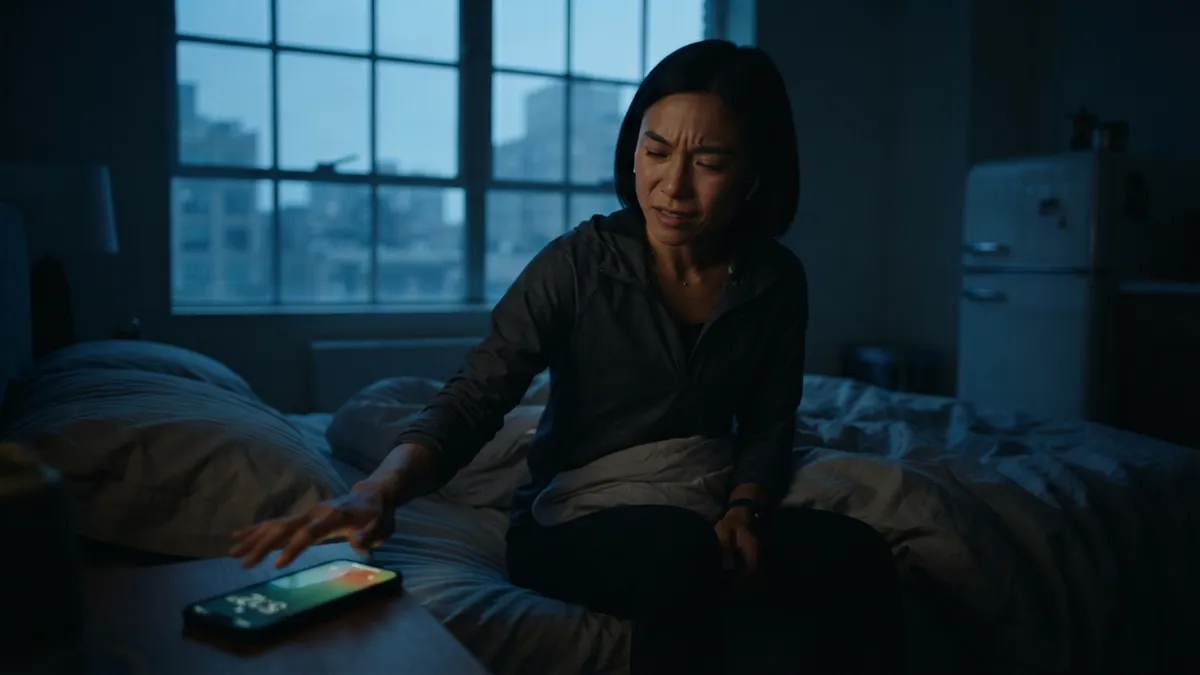
The hook is a feeling everyone in the target audience knows. It doesn't show the product at all — it earns the next three seconds.
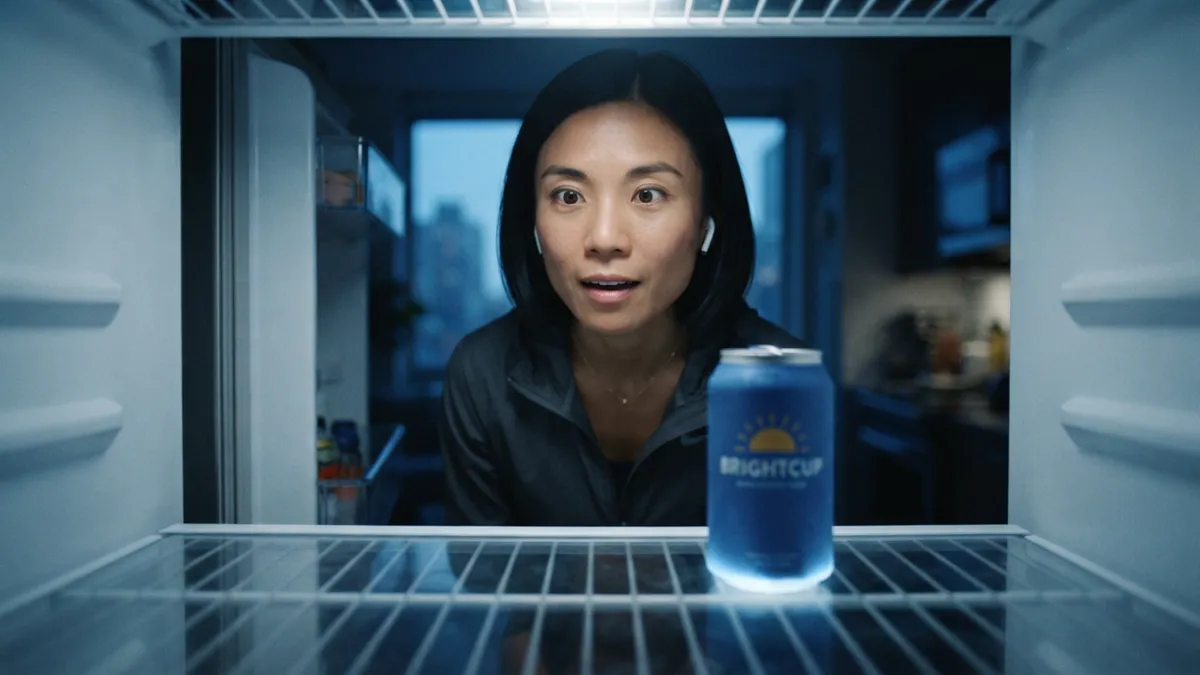
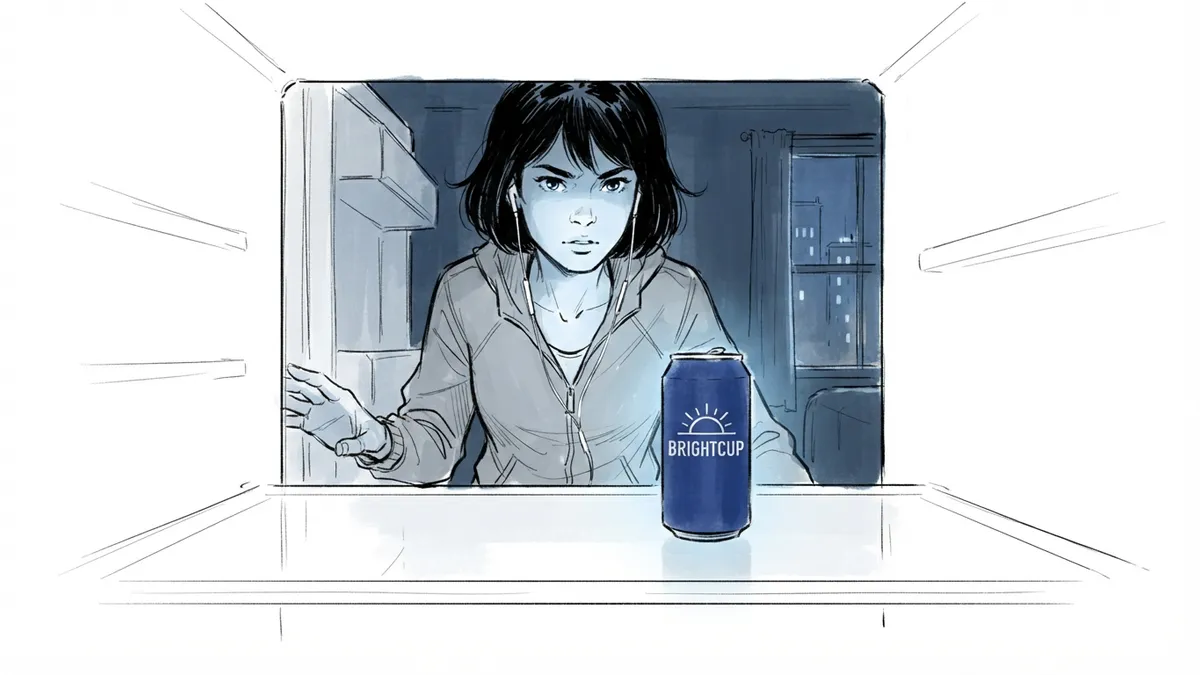
Shooting from inside the fridge is a cheap, recognisable angle that puts the product and the person in one frame.
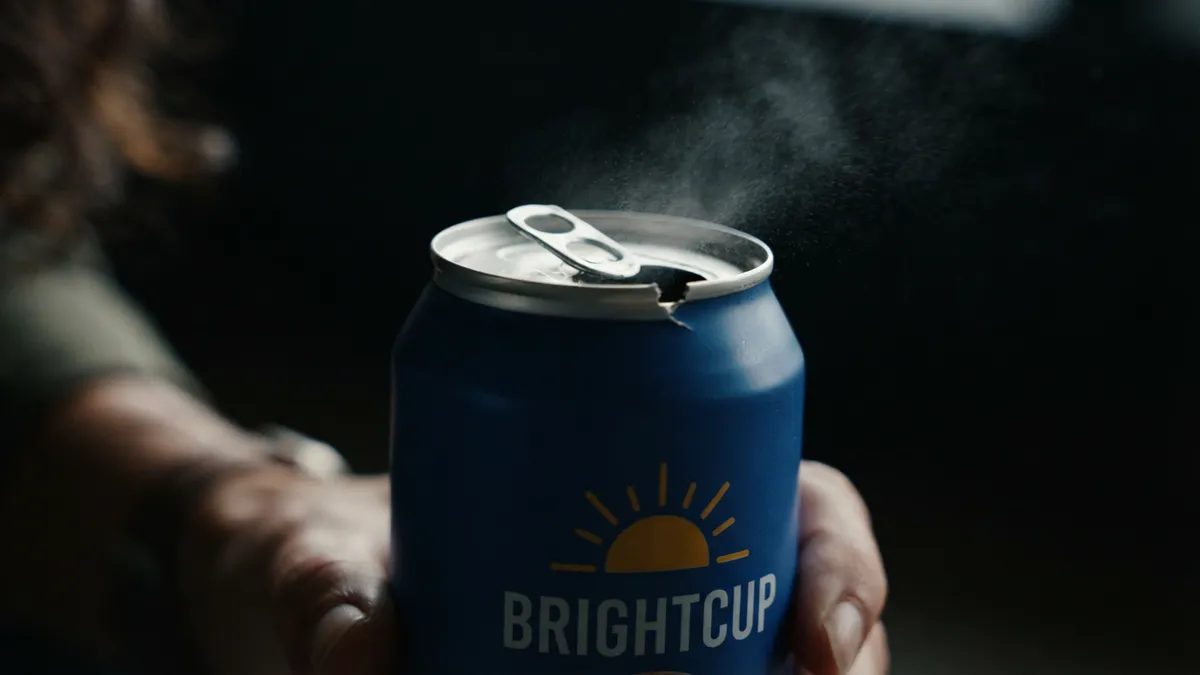
Every drinks ad needs its "crack and fizz" moment. Storyboard it as its own frame, because it will be its own setup on the day — usually a separate table-top shoot.

The payoff gets the most screen time and the least explanation. Two frames are enough to show the director the scale (wide) and the emotion (close).

Leave room in the packshot frame for the line and logo. If the board doesn't show where the type goes, the shot often won't leave space for it.
How do you present a storyboard to a client?
- Lead with the idea, not the frames. One sentence on what the spot is about, then the board.
- Read it in real time. Talk through the board at the speed of the spot, so the client feels the 30 seconds rather than reading 30 seconds of panels.
- Show alternatives as alternatives. If you have two endings, show two packshot frames side by side rather than describing the second.
- Send a PDF afterwards with timings and notes on every frame, so the conversation continues on the same document.
Should a 15-second cut have its own storyboard?
Usually, yes — at least a short one. A 15-second cutdown isn't the 30 with frames removed; it often needs a different hook and goes to the product sooner. Duplicate the board and cut it down frame by frame. You'll quickly see which shots carry the story and which were only there for pace.
The short version
Structure the spot by the second, give every frame a shot size, an action and a timing, and use the board to make the expensive decisions — the product moment, the payoff location, the packshot — before the shoot day. If you're starting from a script, our guide to turning a script into a storyboard covers the breakdown step in detail.